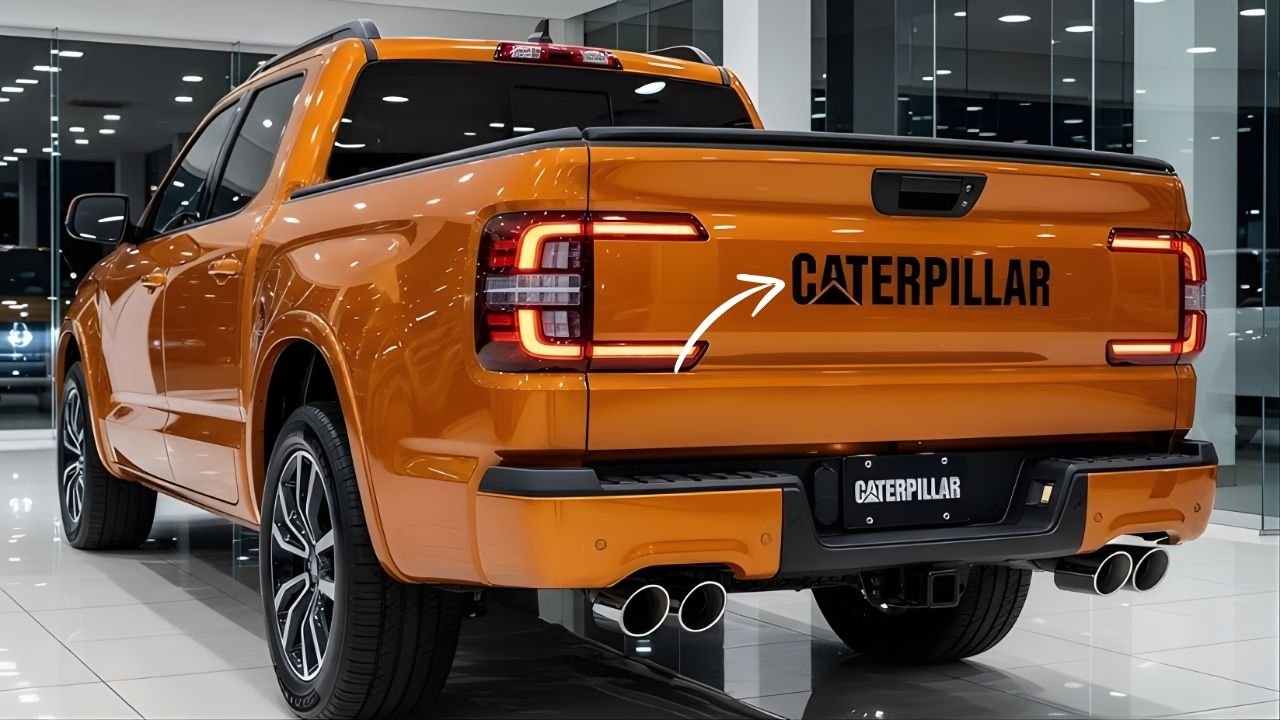
The idea of a pickup truck engineered with the DNA of industrial machinery has captured global attention—and at the center of that conversation is the rumored 2026 Caterpillar pickup concept. While not an officially confirmed production vehicle from Caterpillar Inc., the concept has sparked serious discussion among truck enthusiasts, contractors, and fleet operators.
In an era where modern pickups increasingly blend luxury with performance, this concept flips expectations. It imagines a vehicle designed first and foremost for endurance, strength, and real-world utility—qualities that have long defined Caterpillar’s presence in heavy equipment.
Why the Caterpillar Pickup Concept Is Gaining Momentum
A Brand Built on Trust and Durability

Few names carry as much authority in the industrial world as Caterpillar. Known globally for producing machines that operate in extreme environments, the brand represents reliability under pressure. That reputation alone has fueled curiosity around what a Caterpillar-engineered pickup might look like.
For many professionals, the appeal lies in the promise of a truck that prioritizes uptime, resilience, and long-term value rather than lifestyle-driven features.
A Shift Away from Luxury-Heavy Trucks
Today’s pickup market is increasingly dominated by premium interiors, large infotainment screens, and comfort-focused upgrades. While these features appeal to a broad audience, they often come at the expense of simplicity and ruggedness.
The Caterpillar concept resonates because it challenges that trend. It suggests a return to fundamentals—where performance, durability, and job-site readiness take precedence over aesthetics and entertainment.
Exterior Design: Purpose-Built for Harsh Conditions
Industrial Styling That Commands Attention
The design language associated with this concept is unmistakably bold. Inspired by heavy machinery, the truck is imagined with a tall, commanding stance and reinforced bodywork that emphasizes strength over style.
Key visual elements often associated with the concept include heavy-duty front bumpers with integrated protection, oversized tow hooks designed for real-world recovery situations, aggressive fender flares for wider track stability, and high-mounted LED lighting for low-visibility environments.

The result is a truck that looks less like a lifestyle vehicle and more like a mobile work tool.
Function Over Flash
Every design detail appears intentional. Instead of chrome accents or decorative trims, the focus is on materials and structures that can withstand dust, debris, and constant use.
This approach aligns with Caterpillar’s core philosophy—machines should be built to perform, not just impress.
Interior: Where Utility Meets Smart Comfort
A Work-First Cabin
Inside, the concept shifts toward practicality without completely abandoning comfort. The cabin is imagined to feature durable materials that are easy to clean and resistant to wear—ideal for construction sites and industrial use.
Seating is expected to be reinforced for long hours of operation, while controls are designed to remain functional even when used with gloves—an often-overlooked detail in mainstream pickups.
Intelligent, Data-Driven Dashboard
Rather than focusing on entertainment, the dashboard concept revolves around productivity. The interface is envisioned to provide real-time operational data, including load and payload monitoring, tire pressure and terrain feedback, vehicle diagnostics and system alerts, and performance metrics under stress conditions.
This approach mirrors the digital systems used in heavy equipment, bringing a professional-grade experience into a pickup format.
Powertrain and Capability: Built for Demanding Workloads
Torque Over Speed
While no official specifications exist, the concept consistently emphasizes one thing: torque. The imagined powertrain centers around a high-output turbo-diesel engine, optimized for pulling power and sustained performance rather than speed.
This aligns with the needs of contractors and fleet operators who rely on consistent output rather than peak horsepower figures.
Heavy-Duty Engineering Focus
The conceptual capability profile includes a reinforced transmission for high-load endurance, an advanced 4×4 system for off-road and uneven terrain, commercial-grade towing and payload capacity, and potential hybrid assistance for improved efficiency.
The emphasis is clear—the truck is designed to handle demanding workloads without compromise.
Technology: Built for Productivity, Not Distraction
Fleet-Ready Smart Features
Technology in this concept is centered around operational efficiency. Instead of entertainment systems, the focus is on tools that improve performance and reduce downtime.
Potential features include remote diagnostics for early issue detection, maintenance tracking and scheduling, real-time performance monitoring, and integration with fleet management systems.
For businesses managing multiple vehicles, these capabilities could translate into significant cost savings and improved reliability.
Safety Designed for Work Environments
Safety systems are imagined with job-site realities in mind. Rather than urban driving aids alone, the concept prioritizes advanced braking systems under heavy loads, trailer stability and control features, enhanced obstacle detection in rugged terrain, and visibility improvements for challenging conditions.
These features reflect a deeper understanding of how work trucks are actually used.
Premium Positioning with a Clear Purpose
A Different Kind of Premium
Unlike traditional premium pickups that emphasize luxury, the Caterpillar concept redefines what “premium” means. Here, it’s about engineering quality, durability, and long-term dependability.
This positions the truck in a unique space—above consumer-grade pickups but below specialized industrial vehicles.
Value for Professionals
For contractors, construction firms, and fleet operators, the value proposition is compelling. A vehicle that reduces downtime, handles extreme workloads, and maintains performance over time could justify a higher upfront cost.
Why This Concept Matters
A Signal to the Industry
The popularity of the Caterpillar pickup concept highlights a growing demand for purpose-built vehicles. It suggests that a segment of buyers is ready to move beyond luxury-focused trucks and return to machines designed primarily for work.
Redefining Expectations
If nothing else, the concept challenges automakers to rethink their priorities. It raises an important question: how rugged can a modern pickup truly be while remaining accessible?
Final Take
The 2026 Caterpillar pickup may not be a confirmed production model, but its impact is already evident. It has sparked a conversation about what trucks should be—and who they should serve.
In a market increasingly shaped by refinement and comfort, this concept stands out as a bold alternative. It represents a vision of uncompromising durability, engineered for those who depend on their vehicles not just for transport, but for productivity and performance.
Whether or not it ever reaches production, one thing is clear: the demand for a true work-first pickup is stronger than ever.